How to Improve Trading Consistency Every Week
A green day can feel like proof that you are improving. A red day can make you question your entire strategy. That emotional swing is exactly why learning how to improve trading consistency is less about finding a perfect setup and more about building a process you can follow when the market, your PnL, and your confidence are all moving fast.
Consistency does not mean winning every day. It means your risk stays controlled, your entries follow defined rules, and your review process gives you a clear answer when performance slips. A disciplined trader can take a loss without turning it into a larger one. That is the standard worth building toward.
How to Improve Trading Consistency Starts With Fewer Decisions
Most inconsistent trading is not caused by a lack of market knowledge. It comes from making too many unplanned decisions during the session. You see a breakout, hesitate, chase the move, size up because you missed the first entry, then exit early on a normal pullback. The chart may have offered a valid opportunity, but the execution became emotional.
Your goal is to reduce the number of decisions you make under pressure. Define what you trade, when you trade it, and what must be true before you enter. A stock trader may focus on opening-range breaks and pullbacks to key levels. A crypto trader may trade only specific sessions and reclaim setups. A futures trader may limit activity to one or two high-volume windows.
This does not mean you can never adapt. Market conditions change, and a strategy that works in a clean trend may struggle in choppy price action. It means your adaptation should be intentional. Change a rule after reviewing enough trades, not halfway through a position because a candle made you nervous.
Build a Trade Plan Before the Order
Before entering, you should be able to state four things clearly: your setup, entry trigger, invalidation level, and profit target or management plan. If you cannot explain those items in a sentence or two, you are probably reacting instead of executing.
Risk-to-reward matters here, but it is not a magic filter. A 3:1 planned trade can still be poor if the stop is unrealistic or the target has no room before major resistance. Likewise, a 1.5:1 trade may be valid if your historical data shows the setup has a high win rate and you can repeat it cleanly. The point is to know the math before the trade, not after the loss.
Keep position size tied to your stop distance and your predetermined dollar risk. When a trade has a wider invalidation level, reduce size. When your account is in a drawdown, consider reducing risk further until you prove your execution is back on track. Protecting capital also protects your ability to think clearly.
Set Rules That Protect You From Your Worst Session
Every trader has a version of themselves that appears after two losses, a missed runner, or an unexpected news candle. That trader wants to win it back immediately. Consistency requires rules that stop that version of you from taking control.
Set a maximum daily loss that ends your trading day. Make it meaningful enough to protect the account, but realistic enough that it does not encourage oversized risk on the next trade. You can also set a maximum number of trades, especially if overtrading is one of your recurring mistakes.
A simple daily framework might include a maximum loss, a maximum number of entries, a preferred trading window, and a rule against adding to a losing position unless it was planned as a scale-in before entry. These guardrails will not eliminate losses. They will prevent a normal losing day from becoming a damaging drawdown.
The same principle applies after a big win. Traders often give back strong morning profits because they become less selective once they are green. If your best setups appeared early and the market is now slow, taking no more trades can be a disciplined decision. You are not paid for screen time. You are paid for quality execution.
Track Execution, Not Just PnL
PnL tells you what happened to your account. It does not always tell you why it happened. A profitable trade can be a bad trade if you ignored your stop and got lucky. A losing trade can be a good trade if you followed the plan and price action invalidated the setup.
This is why a trading journal should capture more than entry and exit prices. Log the setup, the market condition, your risk-to-reward, and a screenshot of the chart. Add behavioral tags such as FOMO, revenge trade, early exit, oversized, or followed plan. Technical tags can identify which patterns actually contribute to your results.
After enough records, patterns become harder to ignore. You may find that your pullback entries have a solid win rate while your breakout chases create most of your red days. You may see that you perform well in the first hour but lose discipline after lunch. These are not personality flaws. They are measurable problems with measurable solutions.
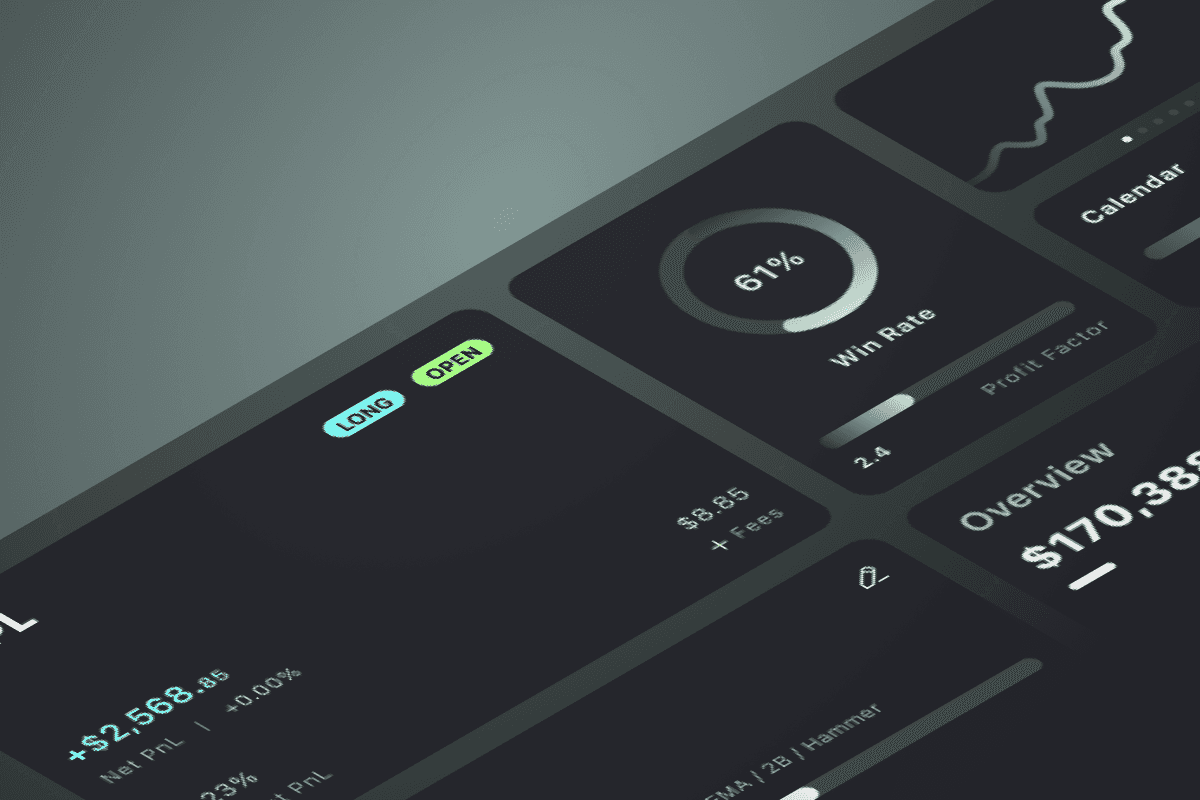
A mobile-first journal such as Leaprr makes this review easier to maintain while the trade is still fresh. The value is not in collecting data for its own sake. The value is using your own trading history to replace assumptions with evidence.
Review Your Best Trades Too
Many traders only journal when something goes wrong. That leaves out the playbook you need most: the setups you execute well.
Review winning trades with the same honesty as losses. Did you enter at your planned level? Did you take partial profits according to plan? Did you cut the position because of fear, or did price action actually change? A win is useful only when you understand what made it repeatable.
At the end of each week, compare your best and worst trades. Look for differences in timing, setup quality, size, market conditions, and emotional state. Your next improvement often comes from doing more of what already works and removing one costly behavior, not from adding another indicator.
Use Small Changes to Build a Repeatable Edge
Trying to fix everything at once usually creates another form of inconsistency. One week you trade only support and resistance. The next week you add RSI, MACD, volume profile, alerts, and five new rules. By Friday, you have no idea what changed your results.
Choose one behavior to improve for a full review cycle. Maybe your goal is to stop moving stops farther away. Maybe it is to wait for candle confirmation before entering. Maybe it is to trade only your A-plus setup for ten sessions.
Make the goal observable. “Be more patient” is hard to measure. “No entries before my defined trigger” is measurable. At the end of the week, review the evidence. Did you follow the rule? How did it affect your win rate, average loss, and emotional state? Then decide whether to keep the rule, adjust it, or focus on another issue.
This approach feels slower than chasing a new strategy, but it produces real progress. Consistency is built through repeated, visible proof that you can trust your process.
Manage Mental Capital Like Trading Capital
A trader can have available buying power and still be mentally unable to make good decisions. Poor sleep, stress, frustration, and the pressure to recover losses all reduce judgment. Ignoring that reality is expensive.
Create a short pre-market check-in. Ask whether you are focused, whether you have a plan, and whether you are carrying emotion from a previous session. If you are distracted or angry, trade smaller or sit out. Skipping a low-quality day is not weakness. It is risk management.
Also separate your identity from a single trade. A red trade does not mean you are a bad trader. A green trade does not prove you should increase size tomorrow. Your job is to execute a valid process over a meaningful sample of trades, then let the data guide your next move.
Make Consistency Your Real Scoreboard
The market will always offer random outcomes. You cannot control whether the next setup wins, whether a headline creates volatility, or whether a clean-looking pattern fails. You can control whether you planned risk, followed your trigger, respected your stop, and recorded the result.
Start with the next session, not the next month. Take fewer decisions, define your risk before entry, and write down what actually happened. Each cleanly executed trade is a vote for the trader you are becoming. Keep collecting those votes, especially on the days when discipline feels harder than pressing the buy button.